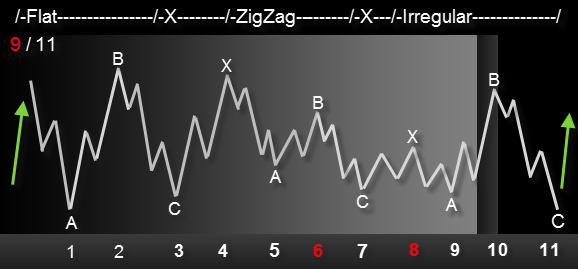
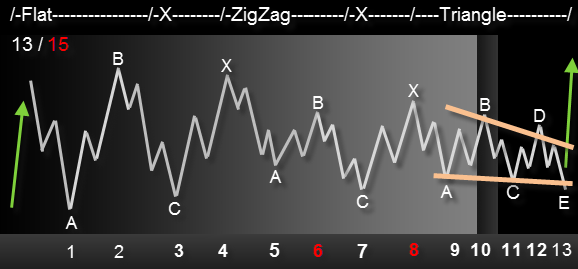
Gold - www.astocycle.net
Gold, Currencies and the 4-8 year cycle Harmonics
With Gold making all time highs the policies of the Federal Reserve and US Treasuries are coming under closer scrutiny and now is a good time to look at the cycles governing the moves in all Currencies including the oldest and most reliable Currencies which are Gold and Silver. The 4, 8 and 16 year cycle Harmonics rule Gold and other Currencies with a tendency to stretch into the larger 50, 100, 200 and 400 month versions but also the PI series of 4.3, 8.6, 17,2 and 34.4 years. For example the Bull Market from August 1896 to September 1929 was 397 months long and rose 1,000%, while the next one from July 1932 to February 1965 was 403 months and went up 2,000%, and the latest one from December 1974 to October 2007 was 394 months and also rose 2,000%, and 400 months is 33.3 years and one third a Century. Gold has been making regular highs near January every 8 years with the next one due near January 2012, but we are likely to make a Wave 3 high between 1200-1300 near January 2010 first and then have a Wave 4 correction before the next Wave 5 high that should take us to 3,200 into January 2012. Recently Gold has been following an 11 and 22 month cycle that is just short of the 12 and 24 month Harmonics of the 1-2-4-8-16 year series. The speeded up tempo is probably due to the increased optimism and momentum shortening the cycles as we get close to the first of three probable Gold highs in January 2012, 2016 and 2020. With the last 11 month highs being in May 06, April 07, March 08 and February 09, the odds of the next one occurring in January 2010 is high since it is also a 22 month cycle high.
US Dollar Summary; The US Dollar is a much more liquid market than Gold and is less regular in its behavior but the 4.3, 8.6 and 17.2 year PI cycle series is easy to confirm with the Yen and US Dollar showing major turns 17.2 years apart. The European and Canadian currencies have also seen highs and lows just about every 16 years for the last 50 to 100 years with the latest lows in 1985-86, 2001-02 and highs in 1979-80 and 1995-96. The US Dollar is actually behaving a lot like it did in the last declining phase of the 17.2 year PI cycle except that it is falling a bit slower from 2002 to 2010 (-40%) than it did from 1985 to 1993 when it dropped 50% of its value. The USD should continue to behave like in the early 1990's and make a low in December or January before moving back once more to the 90 area in 2010. We are already 17.5 years from the July 1992 low in the US Dollar and a turn higher is expected any time, but we made marginal new lows in July 1992 and there is a small risk we could breach the 70 level briefly despite the weaker bearish momentum of 2002-2010 vs. 1985-1993 which suggests we won't see new lows and the 74 area should hold.
UsaCad,

British G-Forces (Gbp-Usd, Gbp-Jpy)


EurJpy - Something about Triangles,

Friday, 20.11 - 2009: Subject; An algorithm


Merkinnät: An algorithm
GbpUsd,

GbpUsd

CocaCola,
13.11 - 2009,
European Friday Morning,
If that´s not end of full impulse, then I am santa clause.
Amazing exact size of waves. It´s also x3.618 from end of W1, at least it have to be end of W3, and right now and right here. Interesting how these actual fibonacci numbers are often turning points. Bottom is placed with 37-38 $, and now at least W3 top with 55 $ - but 2.618 and 3.618 relations argues in here strongly that it could end of entire impulse allready.
Who knows does fifth take this to 61.8 $ some day but this is my shorting candidate for next week from here. This is 60 minute chart, if one looking it there´s no need to hardcore EW theorist to determine end of impulse in here with this degree as W5 is x1.382 size also, at least stops could be set for just above of cents from the current price. If you look second chart fifth wave breakes pretty easily for it´s own impulse also with same timeframe and it looks to be pretty much run it´s cource in here.
UsaCad was the most powerfull mover today in percentage terms between the FX pairs and it seems my anticipated, potential W2 was correct for it or it´s possible as price reversed from 76% line, but unfortunately it occured from asian late hours or too early european hours and I missed that myself !

UsaCad, Update,
Update,
With last 10 hours progress nothing happened but both of those patterns which were they are gone, propably both run out of time while price hasn´t move anywhere except inside of 15 pips (there was actually gartley also with 4H chart before) .
With 4H chart this is now bullish, inverse HS. One might want to take a look if 5 & 15 min charts are going to build ending diagonal in here because this area is more than interesting with 61.8 & 0.786% retracements is this passed impulse really finished or is it going to get another leg from from here because if it does we might do speak major size of W2 bottom and that´s what makes this chart important. 
Usa-Cad
Merck & Time Counting Thoughts
6.11 - 2009,
Well, for this it´s good to end week and step away. Fridays tends to be more or less silent anyway as money has left from the building allready to spend weekend.
It´s time to look some passed charts. On last sunday 13 Dow Jones stocks and 21 QQQQ stocks had this same bullish pattern and none of them failed during the week instead gave their reversal boost. Posted a few of them like 3M and Honeywell week ago. Looks alike UsaCad then run it´s pattern now also - it was just thinking a few days first with the pivot line.
Chart below as Merck didn´t fail either. Not bad pattern, not at all. Posted now this one as it´s perfect in every matter when it comes to actual size of the waves.
I did study some EW time counting recently and unfortunately I have to agree what Pesavento, John Elder and number of other famous folks discovered long time ago allready. Theory have big holes and it´s all related for time counting. There´s very few time counting rules exist yet for EW and most of the EW analysts won´t use even existing one´s as everyone are focused more or less for price counting only, there´s lot of new things to be find out. Added existing EW time rules to left side bars also.
"when time is up prices must turn - W.D. Gann"
Enjoy your weekend.
UsaCad & GbpJpy
Halloween Special for all EW Analysts
You asked wave relations, you will get relations.........
Take a look of IBM chart...upcoming soon...
http://www.tradingarsenal.com/
Goldman,
SPX
SPX & Ebay
Ebay
22.10 - 2009,
Looks alike that Merck started to land then, it actually did ramp 1 $ more to hit 34 $ before that happened but good to leave some room, potential end of W3´s are allways good to exit whatever is the degree, but this one does not look very healty either in here. 3-drive patterns marks 5 different things in EW, shapes and angles determines which is the case but in here it looks mostly to end double zigzag.
Sometimes it comes to marks top of W3 also (occured today for Gbp-Usd) while it offered short and lazy (thrust) W5 for the US session before consolidation started. This was the case with Merck too as we can see now.
Ebay looks alike ending diagonal with 4 hours data chart and this is internal zoom for it with 1 hour datachart. If that´s the case zigzag impulses would fit for it.
Merck
18.10 - 2009, Sunday Evening Wonder,
Some of my previous posts suggested there several long drive wonders for Merck but it looks for me first impulse since contracting triangle bottom fishing looks to be finished or about end in here or at least W3 for it is set allready. There´s also hourly butterfly (not in these charts). It leaves a few options open whatever it´s going to be extended or not but best profits from this setup is now taken home allready when it comes to high probs.
I wouldn´t be too pessimistic yet, contracting triangle was pretty large and it looks for me this is only first impulse for it. If it zigzag´s larger degree w2 down from here later, there´s much later open possibility even stronger fireworks with next w3.
Cad-Jpy
Altera, ALTR
13.10 - 2009,
Before so busy earnings season stars had been looking a few cases. Altera W5 top might be close in here with 240 minute chart. One minute is suggesting still impulsive movement to the upside with triple tree. In fact it´s possible it was allready ABC triangle and this latest D is mini impulse for it (if really counting pennies with it).
Market Harmony looks bearish with it with 240 minute chart but those butterflys often marks only change of waves which might be W3 top with this case. However as alternate it knocks very major fib resistance in here and if it would be only ABC corrective movement since bottom things could go ugly. XA=x1.618 at 21.83 might come interesting.
Let´s see how does it goes, it´s going to be aftermarket issue. Overall, we´re likely dealing with very last impulse anymore.

Gbp-Jpy, 15 Min
Sunday Evening Wonder - 3 Drive Pattern
12.10 - 2009,
Let´s try to breake 3-drive pattern as it takes very different kind of shapes and angles by EW point of view. I had found it at so far to come either as W1 impulse or Double ZigZag. In most cases what I had seen at so far it comes as WXY - Double or Triple ZigZag which is also end of the current direction, but you need to look inside of the pattern very carefully what waves there actually is placed.
Eur-Jpy,
8.10 - 2009,
Chart results 24 hours later. Somewhat alternate knocks in here as ABC corrective movement also as XA1.27 target was reach for european session. Exit. Perhaps we do ZigZag as W2 in here or perhaps it´s corrective movement for impulses. I believe all yen crosses are still going to ramp somewhat higher but currently don´t see any decent entry for them. Let´s see what other exiting I might found out later as earnings season kicks in..
Eur-Jpy, What is Elliott Wave ?
7.10 - 2009,
Elliott wave is that you will find product which retraces maximum size for W2 which is 76-78% and you will buy that bottom. Any failure offers minimal stops and maximal return. Eur-Jpy jumped at this morning in european session after it retraced 76% of inverse bullish HS pattern. Certainly, it could be impulse allready
Since then in the US session price has declined again (stronger yen) 76-78 % which is where it currently trades. This price is 130,00. If this R3 is able to keep it, there´s chance for big run in here. If it fails, failure could be significant since it seems there´s possiblity Usd-Jpy is on the way to 80.00. Any deeper retracement destroys possibility from W3, then there would be only zigzag´s left.
Long at 130,00, stops 129.82
Merck Co. (MRK)
7.10 - 2009,
New day, new challenge. Saga on my contracting triangle breake occures with possible breake.
Proudly presents today as 3-drive bullish pattern now with ending W4. Long.
Merck Co. (MRK)
Merck Co. Hourly and Daily Chart
5.10 - 2009,
HPQ trade below closed as target met today over the weekend.
Opened another long position for pretty interesting EW setup. Merck offered reasonable massive shorting pattern earlier, but it refused to drop more as 1.27 target was met (with this same pattern with RIMM gave huge plunge in percentage terms).
Merck is building sideways triangle, which is bullish as 2 of the waves related each other by .618%. More over price was also retraced by .618% on last week. As an alternate this is ABC corrective structure since bottom and if triangle fails drop could be significant. My stops are placed for .618% line. Often bullish triangle is offering fast and furious (often also short) W5 impulse. Pattern might require some time to develop inside of the triangle because none of the waves inside of triangle has not taken yet complex structure and one of them should (usually it´s D wave). Be aware that market geometry pattern is not bullish with this stock - pretty opposite at so far , it´s this EW triangle alone which opens bullish options with it and triangles can fail. since 31,00 $ stops with 61.8% it´s basically free to test for longside I am in with it.

Yiruma - River Flows in You
5.10 - 2009
For sunday evening,
Song flows like a market, in natural harmonical order - enjoy your week and enjoy this.
http://www.youtube.com/watch?v=rhN7SG-H-3k&feature=related
QQQQ, Cubes Daily + Eur-Usd Weekly
4.10 - 2009,
Saturday Night Wonder. I think some major timeframe charts starts to shows market geometry patterns that we might start to have much bigger troubles ahead. That pattern shorted allready QQQQ at 43.00 and Eur-Usd is not far away at any day to splash bearish geometry pattern either, at so far it´s been only developing (emerging) but pictures are not beautifull anymore (or they are, depends of the individual view).
Eur-Usd
16.9 - 2009,
Bearish times are getting closer and closer and closer...
Fifth wave bearish diagonal on the progress, we just passed w3 of it.
Eurodollar,
9.9 - 2009
Allright, that was a hit, triangle started Z wave impulse so it´s W-X-Y-X-Z but if one prefer to be more safe than sorry there´s propably 100 pips overthrow upcoming or ~so later, but this 61.8% is very danger zone now and it´s closing very very fast. Often with chart size like this massive it tends to overthrow but falling back later.
Eurodollar,
5.9 - 2009,
Saturday morning wonder - perhaps triple correction is coming to the end to finish double zigzag Z impulse wave. W-X-Y-X-Z and end of story > back to the 1.2500 area (if it´s not going to be triple zigzag Z wave impulse).
Generally EW triangles ends the corrections, but there´s also double and triples triples exist...

Goichi Hosoda, Ichimoku Kinko Hyo Chart
Freaking cold sunday in here so I looked something new for a while.
Goichi Hosoda developed the Ichimoku Kinko Hyo charting technique in 1968.
I´ve heard in recent year from many sourches and they do well with Ichimoku Charts with various of markets. To be a bit curious I finally added them to my metastock and metaframe 4.0. I think will add these to my arsenal tool, even I would like to keep technical tools in very minimal range. If you have any state-of-art platform it´s easy to program alert signals without need to monitor it all the time.
It´s actually pretty simple method, chart appears to look a bit weird at very first sight and took a while before learned to read it. After run some robot performance tests between the timeframes, result were pretty impressive.
The technique gives an easy gate to determine buy and sell signals, support and resistance levels, trends, and signal strength. The charting method is not without its drawbacks, such as its need for empirical decision making and time period definitions and its indications to make high frequency trades.
1. Tenkan-Sen, or conversion line (red) - (Highest high + lowest low) / 2, calculated over the past seven to eight time periods.
2. Kijun-Sen, or base line (maroon) - (Highest high + lowest low) / 2, calculated over the past 22 time periods.
3. Chikou Span, or lagging span (pink)- The most current closing price plotted 22 time periods behind (optional).
4. Senkou Span A (green)- (Tenkan-Sen + Kijun-Sen) / 2, plotted 26 time periods ahead.
5. Senkou Span B - (blue) (Highest high + lowest low) / 2, calculated over the past 44 time periods. Plot 22 periods ahead.
The Ichimoku chart can be used to determine a variety of things. Here is a list of most basic signals commonly used;
Strong signals - A strong buy signal occurs when the Tenkan-Sen crosses above the Kijun-Sen from below. A strong sell signal occurs when the opposite occurs. The signals must be above the Kumo.
Normal signals - A normal buy signal occurs when the Tenkan-Sen crosses above the Kijun-Sen from below. A normal sell signal occurs when the opposite occurs. The signals must be within the Kumo.
Weak signals - A weak buy signal occurs when the Tenkan-Sen crosses above the Kijun-Sen from below. A weak sell signal occurs when the opposite occurs. The signals must be below the Kumo.
Overall strength - Strength is shown to be with the sellers if the Chikou Span is below the current price. Strength is shown to be with the buyers when the opposite is true.
Support/resistance levels - Support and resistance levels are represented by the presence of the Kumo. If the price is entering the Kumo from below, then the price is at a resistance level. If the price is falling into the Kumo, then there is a support level.
Trends - Trends can be determined by simply looking at where the current price is in relation to the Kumo. If the price stays below the Kumo, then there is a downward trend (bearish). Alternatively, if the price stays above the Kumo, then there is an upward trend (bullish).
"Ichimoku" is a Japanese word that means "one look." This charting technique was created by a Japanese newspaper writer. It does look very complicated when a trader sees the indicator for the first time, but don't hesitate to give this indicator a try because the complexity quickly disappears once you gain an understanding of what the various lines mean and why they are used.
Merkinnät: Goichi Hosoda, Ichimoku Kinko Hyo Chart
ZigZag Rulez
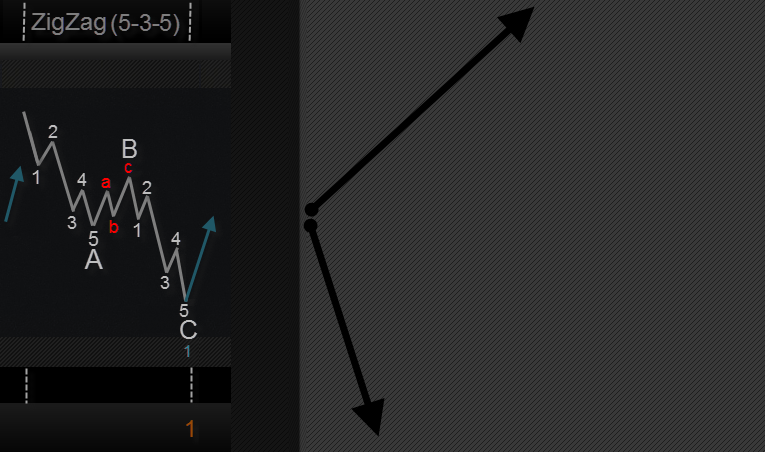
A ZigZag is a three wave structure labeled A-B-C, generally moving counter to the larger trend.
It is the most common three wave Elliott pattern.
Zigzags are corrective in nature.
Wave A must be an Impulse or a Leading Diagonal.
Wave B can only be a corrective pattern.
Wave B must be shorter than Wave A by price. All internal points are considered.
Wave B must be at least 20% of A by price.
Although there is no minimum time constraint for Wave B, it must not exceed 10 times the time taken by Wave A.
Wave C must be an Impulse or an Ending Diagonal.
If Wave A is a Leading Diagonal, then Wave C must not be an Ending Diagonal.
Wave C must be longer than 90% of Wave B by price.
Wave C must be less than 5 times Wave B by price.
It is not allowable to have both Wave 5 of A a failure (Wave 5 is shorter then Wave 4) and Wave 5 of C a failure.
Wave C must be no more than 10 times either Wave A or B in price or time.
ZigZag GuideLines
It is unusual for a Wave within Wave A to have a greater gross price movement than Wave A.
Wave B should end nowhere near beginning of Wave A.
Wave B should retrace at least 30% of Wave A.
Wave B is most likely to retrace Wave A by about 38.2%.
Wave B is next most likely to retrace Wave A by about 50%.
Wave B is next most likely to retrace Wave A by about 61.8%
.
The largest Wave in B is usually less than the gross price movement of Wave A.
The time taken by Wave B is usually between 61.8% and 161.8% of the time taken by Wave A.
Wave C is most likely to have a similar price length to Wave A.
The next most likely price lengths for Wave C are 61.8% and 161% of Wave A.
The next most likely price length for Wave C is 61.8% of Wave A beyond the end of Wave A.
If Wave C is much longer than 161.8% of A, then the pattern is more probably the beginning of an Impulse than a Zigzag.
If Wave C is complete, and has a greater slope than Wave A, expect the Zigzag to extend to an Impulse.
Although Wave C should always be greater in price to Wave B, in rare cases Wave C can be up to 10% shorter than Wave B.
The largest Wave within C by price is usually less than the gross price movement of Wave A.
The time taken by Wave C is usually between 61.8% of Wave A and 161.8% of the shortest Wave of A and B.
Flat Rulez
A Flat is a three wave pattern labeled A-B-C that moves generally sideways. It is corrective and counter-trend and is a very common Elliott pattern.
Wave A can be any corrective pattern except a Triangle.
Wave B can be any corrective pattern except a Triangle.
Wave B must retrace more than 70% of Wave A.
Wave B is less than twice the price movement of Wave A, including internal points of Wave B.
Although there is no minimum time constraint for Wave B, it must be less than 10 times Wave A.
Wave C must be an Impulse or Ending Diagonal.
Wave C must share some common price territory with Wave A.
Wave C must be less than twice the longest of Waves A and B, including internal points of Wave C.
Wave C must be less the three times the price distance of Wave A.
Disallow back to back failures.
Wave C must be no more than 10 times either Waves A or B in price and time.
There is no minimum time constrains for Wave A.
Flat GuideLines
Wave A is usually a Zigzag family pattern.
Wave A is rarely an Expanding Triangle.
The largest Wave within Wave A is usually less than Wave A by price.
Wave B is usually a Zigzag family pattern.
Wave B is rarely a Flat.
Wave B is usually greater than 95% of Wave A by price.
Wave B is usually less than 140% of Wave A by price.
The largest Wave within B is usually less than Wave A by price.
The time taken by Wave B is generally between 61.8% and 161.8% of Wave A.
Wave C is rarely an Ending Diagonal.
Wave C is often about the same length as both Wave A and B.
Wave C often ends at point which is a percent of Wave A beyond end of Wave A equal to the same percentage away from the start of Wave A.
Wave C usually retraces a minimum of 100% of Wave B.
Wave C normally reaches to the end of Wave A.
Wave C is not often more than 140% of the longer of Wave A or B.
If Wave C is longer than Wave B, then Wave C is often about 61.8% of A beyond end of A.
If Wave C is longer than Wave B, then Wave C is often about 161.8% of Wave A from end of Wave B by price.
The time taken by Wave C is generally between 61.8% of Wave 1 to 161.8% of the shortest of Waves A and B.
Leading & Ending Diagonal Rulez
-----Leading & Ending Rulez-----
(LD = Leading Diagonal, ED = Ending Diagonal)
A Diagonal is a common 5 Wave Impulsive pattern labeled 1-2-3-4-5 that moves with the larger trend.Diagonals move within two channel lines drawn from Waves 1 to 3, and from Waves 2 to 4.
A Diagonal must be contracting. There exist two types of Diagonals; Leading and Ending. They have a different internal structure and are seen in different positions within the larger degree pattern.
Ending Diagonals are much more common than Leading Diagonals.Wave 1 of a LD must be an Impulse or a LD.
Wave 1 of an ED must be a Zigzag family pattern.
Wave 2 may be any corrective pattern except a Triangle.
Wave 2 must be less than Wave 1 by price.
Wave 3 of a LD must be an Impulse.
Wave 3 of an ED must be a Zigzag family pattern.
Wave 3 must be greater than Wave 2 by price.
Wave 4 may be any corrective pattern.
Waves 2 and 4 must either overlap or be within 10% of length Wave 3 of doing so. All internal data points are considered.
The time taken by Wave 4 must be between 10% and 10 times the time taken by Wave 2.
Wave 5 of a LD must be an Impulse or ED.
If Wave 1 is a LD then Wave 5 cannot be an ED.
Wave 3 must not be shorter than both Waves 1 and 5.
Wave 5 must be at least 80% of Wave 4 by price.
Wave 5 is never the longest when compared with Wave 1 and Wave 3.
Wave 5 is always less than Wave 3 by price.
The intersection of the channel lines must be beyond the end of the pattern.
Diagonals must move within the two channel lines or be within 10% of gross movement.
Diagonal GuideLines
Wave 1 of a LD is usually an Impulse, but in rare cases may be a LD.
Wave 2 is usually ZigZag family pattern.
Generally Wave 2 is greater than 35% of Wave 1's gross price movement.
Wave 4 is commonly a Zigzag.
It is rare that at least either Waves 2 or 4 of an ED is not a Zigzag family pattern.
Generally Wave 4 is greater than 35% of Wave 3's gross price movement.
The end points of Waves 1 and 4 generally overlap.
Expect the time taken by Wave 4 to be between 20% and 5 times Wave 2.
Wave 5 is usually greater than Wave 4 by price.
It is typical for Wave 5 of a LD to end before reaching the channel line.
It is typical for Wave 5 of an ED to exceed the channel line.
Triangle Rulez
(CT = Contracting Triangle, ET = Expanding Triangle)
A Triangle is a common 5 Wave pattern labeled A-B-C-D-E that moves counter-trend and is corrective in nature.
Triangles move within two channel lines drawn from Waves A to C, and from Waves B to D.
A Triangle is either Contracting or Expanding depending on whether the channel lines are converging or expanding. Expanding Triangles are rare.
Wave A of a CT is always either a Zigzag based pattern or a Flat. Wave A of an ET can only be a Zigzag based pattern.
Within Wave A of a CT, Wave B must be less than 105% of Wave A's price length. The same rule applies for Waves C and D of the CT.
Wave B must be a Zigzag based pattern.
Wave C of a CT can be any corrective pattern except a Triangle. Wave C of an ET must be a Zigzag based pattern.
Wave B of a CT must retrace Wave A by 50%.
For a CT, Wave C must be less than Wave B by price and Wave C must be greater than or equal to 50% of Wave B by price.
For an ET, Wave B must be less than Wave C by price and Wave B must be greater or equal to 50% of Wave C by price.
Wave D of a CT can be any corrective pattern except a Triangle. Wave D of an ET must be a Zigzag based pattern.
Wave B, C and D must not move more than 10% beyond the A-C & B-D channel lines (based on the length of Wave C).
In an ET, Wave C must be less than Wave D by price and Wave C must be more than 50% of Wave D by price.
In an ET, Wave A must move within the A-C channel or pass through it by no more than 10% of the length of Wave B by price.
In an CT, Wave D must be less than Wave C by price and Wave D must be greater than or equal to 50% of Wave C by price.
The intersection of the channel lines must occur beyond the end of a CT, and before the beginning of an ET.
The channel lines must either converge or diverge. They cannot be parallel.
Wave D of a CT must not end such that when retraced 25% by E, E will not reach the price territory of A.
Only one channel line in a CT may be horizontal. Neither channel line of an ET can be horizontal.
The maximum time for Wave D is 4 times Wave C.
Wave E of a CT can either be a CT or a Zigzag family pattern. For an ET, Wave E must be a Zigzag based pattern.
In an ET, Wave E must be greater than Wave D by price and Wave D must be greater or equal to 50% of Wave E by price.
In an ET, either Wave A or B will be the shortest Wave in the pattern.
In a CT, Wave E will be less than Wave D by price and Wave E will be greater than or equal to 25% of Wave D by price.
In a CT, either Wave A or B will be the longest Wave in the pattern.
In a CT, the maximum time for Wave E is 4 times Wave C.
Wave E must end in the price territory of A.
Wave E must not pass through the B-D line, or if it does, by no more than 10% of the length of Wave D.
The maximum number of pattern lengths into the future that the channel lines intersect is 6.
Triangle GuideLines
Wave A is usually a zigzag family pattern.
Wave B is usually a zigzag family pattern.
Wave C is often a zigzag family pattern.
Wave C usually takes more time than any other Wave in the pattern.
Wave D is usually a zigzag family pattern.
Waves B, C and D rarely move outside the B-D line.
Waves A, B, C and E rarely move outside the A-C line.
Wave E is usually a zigzag family pattern or the same type of Triangle as the larger pattern.
Usually at least two Waves travelling in the same direction will relate by about 61.8%.
It is common for two or more adjacent Waves will be related by 61.8%.
In a CT, Wave E normally retraces Wave D by about 70%.
Double & Triple ZigZag Rulez
Double (DZ) and Triple (TZ) Zigzags are similar to Zigzags, and are typically two or three Zigzag patterns strung together with a joining Wave called an “x” Wave, and are corrective in nature.
Doubles are not common, and Triples are rare.
Zigzags, Double Zigzags and Triple Zigzags are also known as Zigzag family patterns, or 'Sharp' patterns.
Double Zigzags are labeled w-x-y, while Triple Zigzags are labeled w-x-y-xx-z.
Both these patterns are included in the list of rules and guidelines below. Only a Double Zigzag is illustrated below.
Wave W must be a Zigzag.
Wave C of W cannot be a failure.
Wave X can be any corrective pattern except an ET.
Wave X must be smaller than Wave W by price.
Wave X must retrace at least 20% of W by price.
The gross price movement of Wave X must be less then 3 times the price movement of Wave W.
Wave X must be no more than 5 times Wave W by time.
Wave Y must be a Zigzag.
Wave Y must be greater than or equal to Wave X by price.
Back to back and double failures are not allowed.
Wave Y must be greater than 90% of Wave W by price, and Wave Y must be less than 5 times Wave W by price.
Wave Y must be no more than a factor of 5 times either Wave X or W in price or time.
Wave C of Y cannot be a failure.
Wave XX can be any corrective pattern except an ET.
Wave XX must be smaller than Wave Y by price.
Wave XX must retrace at least 20% of Y.
The gross price movement of Wave XX must be less than 3 times the gross movement of Wave W.
Wave Z must be a Zigzag.
Wave Z must be greater than or equal to Wave XX by price.
Wave Z must be less than 5 times Wave Y by price, and must also be less than 5 times Wave W by price.
Wave Z must be no more than a 5 times either Waves XX, Y, X or W in both price and time.
-----Double and Triple ZigZag Guidelines-----
The largest Wave in Wave W is usually less than Wave W by price.
Wave X is usually a Zigzag family pattern.
Wave X is usually less than 70% of Wave W by price.
Wave X will usually retrace at least 30% of Wave W.
Wave X is most likely to be a 38.2% retracement of Wave W.
Wave X is next most likely to be a 50% retracement of Wave W.
Wave X is next most likely to be a 61.8% retracement of Wave W.
The largest Wave in Wave X is usually less than 140% of Wave W by price.
The time taken by Wave X is usually between 61.8% and 161.8% of Wave 1.
Wave Y is next most likely to be equal to 61.8% or 161.8% of W by price.
Expect the time taken by Wave Y to be between 61.8% of Wave W and 161.8% of shortest of Wave W and X.
Wave XX is usually a Zigzag family pattern.
Wave XX is usually less than 70% of Wave Y by price.
Wave XX will usually retrace at least 30% of Wave Y.
Wave XX is most likely to be a 38.2% retracement of Wave Y.
Wave XX is next most likely to be a 50% retracement of Wave Y.
Wave XX is next most likely to be a 61.8% retracement of Wave Y.
The largest Wave within Wave XX is usually less than 140% of Wave Y by price.
Wave Z is most likely to be about equal to Wave Y by price.
Wave Z is next most likely to be about equal to 61.8% or 161.8% of Wave Y.
The largest Wave in Wave Z is usually less than Wave Y by price.
Double and Triple Sideways Rulez
Double (D3) and Triple (T3) Sideways patterns are similar to Flats, and are typically two or three corrective patterns strung together with a joining Wave, called an “x” Wave, and are all corrective in nature.
Doubles are not common, and Triples are rare. Doubles are labeled w-x-y, while Triples are labeled w-x-y-xx-z. Both these patterns are included in the list of rules and guidelines below. Only a Double 3 is illustrated below.
Wave W may be any corrective pattern except a Triangle, double or triple.
Wave C of W cannot be a failure.
Wave X may be any corrective pattern except a Triangle, double or triple.
The minimum X Wave retracement is 70% of Wave W.
The maximum price distance of Wave X is 150% of both the previous Wave and ensuing Wave. All internal data points are considered.
Although there is no minimum time for Wave X, the maximum time is 10 times the time taken by Wave W.
Wave Y may be any corrective pattern except double, triple or a Triangle in a Triple Zigzag. However, Wave Y cannot be a Zigzag if Wave W is a Zigzag.
Wave Y must be greater than or equal to Wave X by price, except if Wave Y is a Triangle.
Wave C of Y cannot be a failure.
Wave Y must be no more than 5 times either Wave X or W in price and time.
Wave Y has no minimum time constraint.
Wave XX may be any corrective pattern except a Triangle, double or triple.
The minimum Wave XX retracement is 70% of Wave Y.
The maximum Wave XX retracement is 150% of previous Wave and ensuing Wave. All internal data points are considered.
Wave Z may be any corrective pattern except double or triple. However Wave Z cannot be a Zigzag if Y is a Zigzag.
Wave Z is greater than or equal to XX by price.
Wave Z must be no more than 5 times either Waves XX, Y, X or W in price and time.
Back to back and double failures are not allowed.
If Wave Y is greater than Wave W by price, then the maximum Wave Z price movement is twice the price movement of Wave W.
Double and Triple Sideways GuideLines
The largest Wave in Wave W is usually less than 140% of Wave W by price.
The largest Wave in Wave X is usually less than Wave W by price.
Wave X is usually less than 140% of W by price.
Wave X is usually greater than 95% of Wave W by price.
The most likely retracement for Wave X is 110% of Wave W.
Time for X is generally between 62% of W1 and 1.618 of the time of W1.
If Wave Y is a Triangle, the most likely length of Wave Y is about 61.8% of Wave W.
If Wave Y is not a Triangle, the most likely lengths for Wave Y are 100% of Wave W, 161.8% of Wave W and 10% of the length of Wave W beyond the end of Wave W.
The largest Wave in Wave Y is usually less than 140% of Wave W by price.
Wave Y is usually less than twice the longest of Wave W and Wave X in price.
Wave Y is generally between 61.8% of Wave W and 161.8% of Wave W in time.
Wave XX is usually a Zigzag family pattern.
The largest Wave in Wave XX is usually less than Wave Y in price.
Wave XX is usually less than 140% of Wave Y by price.
Wave XX is usually greater than 95% of Y by price.
The most likely retracement for Wave XX is 110% of Wave Y.
If Wave Y is a Triangle, most likely length by price is 61.8% of Wave W.
If Wave Y is not a Triangle, then the most likely lengths are 100% of Wave W, 161.8% of Wave W and 10% of length of Wave W beyond the end of Wave W, all by price.
The largest wave in Wave Z is usually less than 140% of Wave Y by price.
Impulse Rulez
-----Impulse Rulez-----
An Impulse is a five Wave pattern labeled 1-2-3-4-5 moving in the direction of the larger trend. It is the most common Elliott Wave pattern.
Wave 1 must be an Impulse or a Leading Diagonal.
Wave 2 may be any corrective pattern except a Triangle.
No part of Wave 2 can more than retrace Wave 1.
Wave 2 must retrace Wave 1 by a minimum of 20%.
The maximum time for Wave 2 is nine times Wave 1.
Wave 3 must be an Impulse.
Wave 3 must be longer than Wave 2 in gross distance by price.
The gross price movement of Wave 2 must be greater than either Wave 2 of Wave 1 or Wave 4 of Wave 1.
The gross price movement of Wave 2 must also be greater than either Wave 2 of Wave 3 or Wave 4 of Wave 3.
Wave 2 must also be greater than 61.8% of the gross movement of each of the above 4 sub-Waves.
Wave 3 and Wave 1 cannot both have 5th Wave failures. (A Failure is an impulsive Wave where Wave 5 is shorter than Wave 4 by price.)
Wave 3 cannot be less than 1/3 of Wave 1 by price.
Wave 3 cannot be more than 7 times Wave 1 by price.
Although there is no minimum time constraint for Wave 3, its absolute maximum time limit is 7 times Wave 1.
Wave 4 can be any corrective pattern.
Waves 1, 2 and 4 cannot overlap except by 15% of Wave 2 with leveraged securities, and then only for a maximum of less than two days.
The gross price movement of Wave 4 must be greater than either the gross movement of Wave 2 of 3 or Wave 4 of 3.
The gross price movement of Wave 4 must also be greater than either the gross movement of Wave 2 of 5 or Wave 4 of 5.
The gross movement by price of Wave 4 must also be greater than 61.8% of the gross movement of each of these four subwaves.
The gross movement by price of Wave 4 must be greater than 1/3 of the gross movement of Wave 2 by both price and percentage movement.
The gross movement by price for Wave 4 must be less than three times the gross movement of Wave 2 by both price and percentage movement.
Wave 3 and Wave 4 cannot both be failures. (A Failure is an impulsive Wave where Wave 5 is shorter than Wave 4 by price.)
Although Wave 4 has no minimum time constraint, the maximum time for Wave 4 is twice the time taken by Wave 3.
Wave 5 must be an Impulse or an Ending Diagonal. However, if Wave 5 is longer than Wave 3 by price, then Wave 5 must be an Impulse.
Wave 5 must move by price more than 70% of Wave 4. (This is not gross movement. Only consider the end points of both Waves.)
Wave 3 must never be shorter than both Wave 1 and 5, by either price distance or percentage price movement.
If Wave 5 is truncated, or contains an Impulse that is truncated, then neither Wave 3 nor Wave 4 can contain a subwave that is truncated. (A truncated pattern is where Wave 5 is shorter than Wave 4. This is also known as a failure.)
The maximum movement of Wave 5 is six times Wave 3 in both price and time.
Wave 5 has no minimum time constraint.
Impulse GuideLines
Wave 1 can be a Leading Diagonal, but this is rare.
Wave 2 is usually a Zigzag based pattern.
Wave 2 usually takes a small amount of time compared to Wave 1. However, Wave 2 is usually takes more than 10% of the time taken by Wave 1.
Wave 2 generally retraces more than 30% of Wave 1 including internal data points.
Wave 2 will usually retraces less than 80% of Wave 1 .
The most likely retracement for Wave 2 is 50% or 61.8% of Wave 1.
The gross price movement of Wave 2 should be greater than the gross price movement of Waves 2 of 1, 4 of 1, 2 of 3 and 4 of 3.
If the gross movement of Wave 2 is between 33% and 40.3% retracement of Wave 1, it is most likely complete.
If the gross movement of Wave 2 has retraced to end of previous Wave 4 of 1, then it is most likely complete.
It is unlikely that Wave 3 will be shorter than Wave 1 by price.
The most likely price range for Wave 3 is between 1.5 and 3.5 times the price range of Wave 1.
Most likely range in time for Wave 3 is between 1 and 4 times the time taken by Wave 1.
Wave 4 is rarely a Zigzag based correction.
It is common for both Waves 4 & 2 to have approximately the same price movement.
Wave 4 will most often retrace more than 20% of Wave 3, including internal points.
Wave 4 will very often retrace about 38.2% of Wave 3.
Wave 4 does not often retrace Wave 3 by more than 50%.
Wave 4 will often retrace into the price territory of previous Wave 4 of Wave 1.
Wave 4 will most often retrace to the end of the previous Wave 4 of one lesser degree.
Waves 2 & 4 usually alternate between Zigzag and Flat. The other alternation is between a Triangle and a Flat.
Leveraged markets may at times overlap by up to 15% of Wave 2 by price.
The gross price movement of Wave 4 should be greater than the gross price movement of Waves 2 of 3, 4 of 3, 2 of 5 and 4 of 5.
Expect the time taken by Wave 4 to be between 100% - 270% of the time taken by Wave 2.
Wave 5 will usually move beyond the end of Wave 3.
When Wave 5 is extended (more than 161.8% longer than both Waves 1 and 3) a point within Wave 4 will often divide the entire Impulse Wave by 1.618.
If Wave 5 is extended (more than 161.8% longer than both Waves 1 and 3), it is common for its price length to be about 161.8% of the gross price length between the beginning of Wave 1 to end of Wave 3.
It is unusual for Wave 5 to travel a greater price or time percentage than Wave 3 traveled in its entirety.
The most likely price targets for Wave 5 are: 61.8% of Wave 1, 100% of Wave 1, 161.8% of Wave 1, 161.8% of the length from the beginning of Wave 1 to end of Wave 3.
If Wave 3 is about equal to 161.8% of Wave 1 by price, the most likely time for Wave 5 is about equal to the time taken by Wave 1.
One of the Impulse Waves (Waves 1, 3 or 5) generally extends (at least 162% times the next longest Impulse Wave).
The most likely Wave to extend is the 3rd Wave of an Impulse. However, in leveraged funds when the Impulse is rising and the degree is Primary or above, the most likely Wave to extend is Wave 5.
A non-extended 5th Wave of less than Primary degree usually has a lower peak volume than a third Wave. However, when the 5th Wave extends (less than Primary degree), Wave 5 has usually shows more volume.
Wave 5, when complete, usually has a lesser slope than Wave 3. However, in leveraged securities when the Impulse is rising and the degree is Primary or above, this is not usually the case.
Wave 5 is usually less than 4 times length of Wave 3 by time.